
Prof.Zidong Wang IEEE Fellow Brunel University of London, United Kingdom |
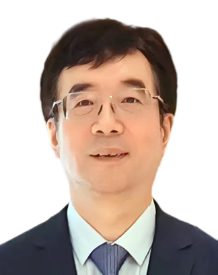
Biography: Zidong Wang is currently a Chair Professor at Brunel University London, UK, a Fellow of the European Academy of Sciences, a Fellow of the European Academy of Sciences and Arts, an IEEE Fellow, and Editor-in-Chief of both the International Journal of Systems Science and Neurocomputing. For many years, he has been engaged in research in control theory, machine learning, and bioinformatics, and has published over 600 international papers in SCI-indexed journals. He currently serves or has served as Editor-in-Chief, Associate Editor, or Editorial Board Member for twelve international journals. He is a former President of the Chinese Automation and Computer Society in the UK, Changjiang Chair Professor (Visiting) at Donghua University, and a national-level expert at Tsinghua University
Title: Big Data Analysis meets LLM: Towards Big Science
Abstract: The rise of Large Language Models (LLMs) and the explosion of big data are redefining how we discover knowledge. This talk explores the powerful convergence of big data analytics and LLM intelligence, highlighting how LLMs can act as scientific co-pilots to help with data processing, hypothesis generation, code automation, experimental documentation, and cross-disciplinary knowledge integration. By addressing limitations such as hallucination, energy cost, and domain adaptation, we look toward a future where human expertise and machine reasoning collaborate at scale. This synergy opens a new era of Big Science, enabling transparent, reproducible, and more creative discovery across scientific domains.
Prof. Xin Luo IEEE/AAIA Fellow Southwest University, China |

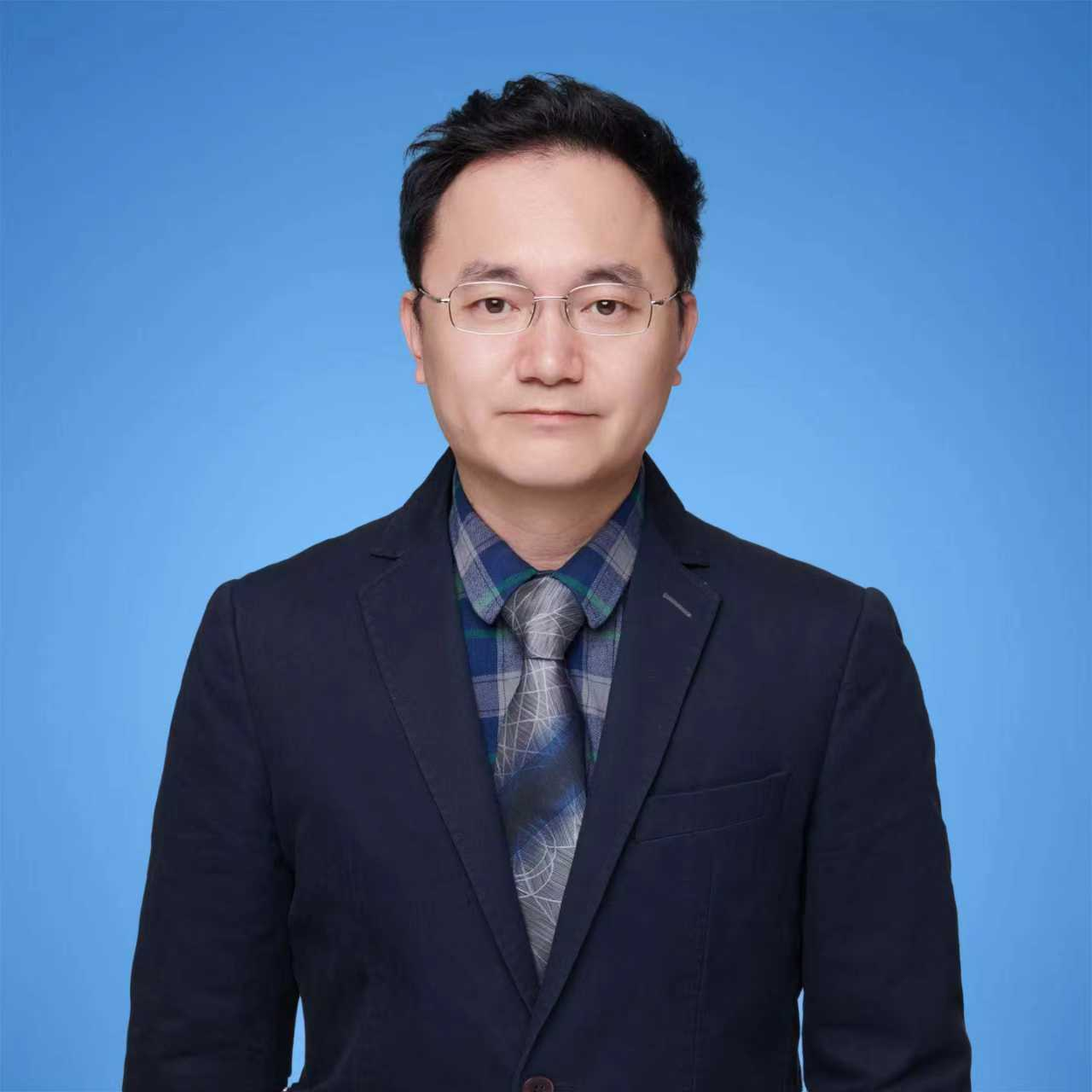
Biography: Xin Luo (Fellow, IEEE) received the B.S. degree in computer science from the University of Electronic Science and Technology of China, Chengdu, China, in 2005, and the Ph.D. degree in computer science from the Beihang University, Beijing, China, in 2011. He is currently a Distinguished Professor of Data Science and Computational Intelligence, and serving as the Dean of the College of Computer and Information Science, and School of Software, Southwest University, Chongqing, China. He has authored or coauthored over 400 papers (including over 190 IEEE Transactions/Journal papers) in the areas of Artificial Intelligence and Data Science, receiving 20,000+ Google Scholar citations with the H-Index of 84. Dr. Luo was the recipient of the Outstanding Associate Editor Award from IEEE Access in 2018, IEEE/CAA Journal of Automatica Sinica in 2020, and from IEEE Transactions on Neural Networks and Learning Systems in 2022-2024. He is currently serving as an Associate Editor for IEEE Transactions on Neural Networks and Learning Systems, and IEEE/CAA Journal of Automatica Sinica. His Google Scholar page is given at the link https://scholar.google.com/citations?user=hyGlDs4AAAAJ&hl=zh-CN.
Title: Nonstandard Tensor Networks
Abstract: Complex and temporal interactions among numerous nodes are frequently encountered in large-scale big data-related applications such as the recommender systems, social network service systems, and cryptocurrency network transaction systems. Such interactions data can be quantized into a step-N (N≥3) tensor whose most entries are unknown, i.e., a nonstandard tensor. Despite its highly incompleteness, such a nonstandard tensor contains rich information regarding various desired patterns like the unknown interactions or undetected communities. To discover such patterns, this talk presents the latent factorization of nonstandard tensors (LFT) models. An LFT model addresses the known data of the target nonstandard tensor in a data density-oriented way and establish highly efficient optimization algorithms for extracting desired latent features from it, thus implementing its representation learning accurately and efficiently. An LFT model has the great potential for industrial usage owing to its high efficiency in both computation and storage.
Prof. Ming Liu Harbin Institute of Technology, China |
Biography: Ming Liu is a Professor and Doctoral Supervisor at the School of Astronautics, Harbin Institute of Technology (HIT). He has been selected as a Young Top-Notch Talent in the National "Ten Thousand Talents Program," a New Century Excellent Talent by the Ministry of Education, and a Clarivate Analytics Highly Cited Researcher. He has received two First Prizes of the Heilongjiang Provincial Natural Science Award (ranked 2nd in 2024; ranked 3rd in 2012).Professor Liu serves as an Academic Leader at the National Key Laboratory of Rapid Design and Intelligent Swarm of Micro-Small Spacecraft and the Basic Science Center for Fully Actuated System Theory and Spacecraft Control Technology at HIT. In 2018. He was a core member of the inaugural "National Huang Danian-style Teacher Team."Professor Liu's research interests focus on advanced autonomous navigation, control, and intelligent health management methods for spacecraft. In recent years, he has presided over more than 20 national and provincial-level projects. He holds 21 authorized invention patents and has published 117 SCI-indexed papers, including 10 papers in top-tier control journals such as Automatica and IEEE Transactions on Automatic Control (IEEE TAC), and more than 30 papers in the IEEE Transactions series. His work has been widely cited and positively evaluated by over 20 academicians of science and engineering worldwide and more than 50 IEEE/IFAC Fellows. Currently, he serves on the editorial boards of journals such as IEEE Control Systems Letters, Franklin Open, and Autonomous Intelligent Systems.
Title: Model-Free Intelligent Methods for On-Orbit Satellite Fault Diagnosis and RUL Prediction
Abstract: Autonomous intelligent health management for on-orbit satellite platforms and their subsystems is a critical technology for achieving intelligent autonomous control in spacecraft. It serves as an effective means to mitigate reliability limitations and enhance the safety and stability of on-orbit operations. This report presents the latest research advancements in satellite autonomous health management (specifically fault diagnosis and prognostics) based on data-driven theories—namely, model-free intelligent methods. The specific contents include: 1)Fault Diagnosis and Performance Monitoring for Attitude Control Systems: Utilizing deep learning techniques such as Graph Convolutional Networks (GCN) and Generative Adversarial Networks (GAN); 2)Diagnosis and Remaining Useful Life (RUL) Prediction for Power Systems: Employing techniques such as Sliced Residual Attention Networks; 3)Unsupervised Anomaly Detection for the Entire Satellite Platform: Based on technologies such as Temporal Deconvolutional Reconstruction Autoencoders; 4)System Simulation: The development of Hardware-in-the-Loop (HIL) simulation platforms and digital twin systems.
Prof. Dong Shen Renmin University of China, China |

Biography: Dong Shen, Wu Yuzhang Distinguished Professor and doctoral supervisor at the School of Mathematics, Renmin University of China. He received his Ph.D. in 2010 from the Academy of Mathematics and Systems Science, Chinese Academy of Sciences, and has worked at the Institute of Automation of CAS and Beijing University of Chemical Technology. He has conducted academic visits at the National University of Singapore and RMIT University in Australia. His research interests include intelligent learning control, control and optimization of stochastic systems, and distributed artificial intelligence. He serves as an editorial board member for several SCI journals and as the editor-in-chief of the Springer Nature book series "Intelligent Control and Learning Systems." He has published six academic monographs and over 60 papers in IEEE Transactions, JAS, and Automatica. He has been listed among the world's top 2% most-cited scientists and Elsevier's Highly Cited Chinese Researchers.
Title: Variable Gain Design for Stochastic Iterative Learning Control
Abstract: In this talk, we first revisit the notion of stochastic iterative learning control and the classical proportional-type update law. It is shown that a fixed-gain proportional law is unable to deliver optimal tracking of a prescribed reference trajectory. To mitigate the effect of stochastic noise, the constant gain must be replaced by a variable one. We then present, step by step, the design rationale and procedures of several novel variable-gain schemes, including adaptive gain, multi-stage gain, and matrix gain.
Prof. Leng Lu Nanchang Hangkong University, China |
Biography: LENG LU received his Ph.D degree from Southwest Jiaotong University, Chengdu, P. R. China, in 2012. He performed his postdoctoral research at Yonsei University, Seoul, South Korea, and Nanjing University of Aeronautics and Astronautics, Nanjing, P. R. China. He was a visiting scholar at West Virginia University, USA, and Yonsei University, South Korea. Currently, he is a full professor, the dean of Institute of Computer Vision, the office director of Jiangxi Provincial Key Laboratory of Image Processing and Pattern Recognition at Nanchang Hangkong University.
Prof. LENG LU has published more than 150 international journal and conference papers, including more than 80 SCI papers and three highly cited papers. He hasbeen granted several scholarships and funding projects, including six projects supported by National Natural Science Foundation of China (NSFC). Heserves as a reviewer ofmore than 100 international journals and conferences. His research interests include computer vision, biometric template protection, biometric recognition, medical image processing, data hiding, etc.
Prof.LENG LU was selected as one of the "World's Top 2% Scientists"four times, andawarded Jiangxi Youth May-4th Medal. He is an outstanding representative of "Innovation Talent" of Jiangxi Enterprise in "Science and Technology China", "Jiangxi Hundred-Thousand-Ten-thousand Talent Project", and "Jiangxi Voyage Project".
Title: Sorting-based Feature Construction
Abstract: Most features used in pattern recognition are represented as real numbers, which significantly reduce recognition accuracy when affected by noise.After the featuresare sorted, manynovel features can be constructed from the sorted sequences and remarkablyenhance stability. Thisspeech will exploremany innovativeideas and methods for developing robust features derived from sorted sequences.
Assoc. Prof. Guangchen Zhang North Minzu University, China |
Biography: Guangchen Zhang , Ph.D. in Science, Postdoctoral Fellow in Engineering, Graduate Supervisor. He is selected into the Young Top Talent Program of Ningxia Hui Autonomous Region. Now, he serves as the vice dean of the School of Mathematics and Information Science. His research focuses on the theories and applications of intelligent control for multi-dimensional information physical systems and prediction control of industrial complex networks. He is the principal investigator of two ongoing projects funded by the National Natural Science Foundation of China and Young Excellent Investigator Project funded by the Ningxia Natural Science Foundation. He has also completed one the Ningxia Natural Science Foundation and higher education Foundation in Ningxia. He has published more than 30 research papers as first author in leading domestic and international academic journals and has authored one academic monograph.
Title: Intelligent control of 2D network systems
Abstract: 2D networked systems can simultaneously characterize state propagation and its coupling relationships along two directions, and have been widely applied in physical processes such as image processing, 2D filtering, and heat conduction. During the operation of 2D networked systems, the systems inevitably face network-induced constraints, such as random data packet loss, quantization, and DoS attacks. In response to these challenges, this work investigates intelligent control for 2D networked systems under such constraints. On the one hand, we aim to solve the sliding mode control issue for the discrete nonlinear 2D Fornasini–Marchesini second model under the influence of quantisation error and stochastic packet loss. On the other hand, we concentrate on H∞ predictive control issue for Roesser-type 2D system under multiple denial of service attacks (DoSs). This report aims to explore intelligent control of 2D networked systems under multiple network-induced constraints, providing theoretical foundations and practical references for enhancing the reliable operation and overall performance of 2D networked systems.
Prof. RAQUEL CABALLERO-ÁGUILA UNIVERSITY OF JAÉN, SPAIN |


Biography: Professor in the Department of Statistics and Operations Research at the University of Jaén, Spain. She received her MSc and PhD degrees in Mathematics from the University of Granada, Spain, in 1997 and 1999, respectively. Her research interests focus on time-varying stochastic systems, complex networks, and the design of estimation algorithms to address emerging challenges in networked systems.
She has authored numerous scientific papers in refereed international journals indexed in the Journal Citation Reports and is included in the Spanish National Research Council (CSIC) ranking of the most cited Spanish female researchers. She has participated in several competitive research projects, both as a research team member and as a principal investigator.
Professor Caballero-Águila is a member of the Executive Council of the Spanish Society of Statistics, Operations Research, and Data Science (SEIO). She is an active reviewer for Mathematical Reviews and currently serves as an associate editor of the Journal of the Franklin Institute (Elsevier) and Systems Science & Control Engineering (Taylor & Francis). She has also served as an associate editor for other international journals. In addition, she regularly reviews for leading scientific journals and has actively contributed to the organization and chairing of sessions at international conferences.
Title: Recursive Estimation in Non-Gaussian Systems under Linear False Data Injection Attacks: A Quadratic Filtering Perspective
Abstract: Modern cyber-physical and networked systems increasingly operate in environments characterized by uncertainty, imperfect communications, non-Gaussian disturbances, and intentional adversarial actions. Among these threats, false data injection (FDI) attacks have emerged as one of the most damaging, as they actively manipulate transmitted measurements in a structured and often stealthy manner, severely compromising the reliability of classical signal estimation algorithms.
Conventional least-squares (LS) estimation techniques usually rely on restrictive assumptions such as Gaussian noises, accurate knowledge of the system dynamics, or attack-free measurements. When these assumptions are violated, especially under random and intermittent FDI attacks, the performance of LS linear estimators can degrade significantly. While LS quadratic and higher-order estimators have shown strong potential to improve accuracy in non-Gaussian settings, the majority of existing quadratic estimation frameworks either assume full knowledge of the signal evolution model or focus on specific attack structures, leaving important practical scenarios unexplored.
This keynote addresses the design of recursive LS quadratic filters for systems under random linear FDI attacks when the signal dynamics are unknown and only statistical information up to fourth-order moments is available. For this purpose, we introduce a covariance-based quadratic filtering framework that, unlike traditional approaches, does not rely on the explicit signal evolution equation. Instead, it leverages the correlation and cross-correlation functions of the signal and its second-order Kronecker powers, assuming that these functions admit suitable factorized representations. The methodology lies in the construction of an augmented observation model, where the original measurements are combined with their second-order powers. This transformation allows the original quadratic filtering problem to be reformulated as a linear one based on the augmented observations, enabling the use of innovation-based recursive techniques. Simulation results demonstrate that the proposed quadratic filter significantly outperforms its linear counterpart, while preserving computational tractability and recursive implementation.
Prof. Xin Hu Ludong University,China |

Biography: Prof. Xin Hu, Professor and the Dean of Ulsan Ship and Ocean College, Ludong University. He is recognized as a Taishan Scholar Young Expert and serves as the leader of the Outstanding Youth Innovation Team of Shandong Universities. His research interests include anti-disturbance control, intelligent control, and ship motion control. Prof. Hu has served as the Principal Investigator for both the General Program and the Young Scientists Fund of the National Natural Science Foundation of China. He was selected for the World Top 2% Scientists Annual Influence List. He was awarded the title of "Outstanding Instructor for Scientific and Technological Innovation." He has received the National Excellent Doctoral Dissertation Award in the field of Intelligent Transportation and the Marine Engineering Science and Technology Award from the China Ocean Engineering Consulting Association.
Title: High-stability anti-disturbance control of sea launch vessels
Abstract: Sea launch vessel represents a critical component utilized to maintain horizontal equilibrium during sea launches, thereby satisfying the high-accuracy requirements for attitude control and payload deployment. Under the multi-source disturbances due to waves, wind and currents, the sea launch vessels experience six degree-of freedom-heave, surge, sway, yaw, roll, and pitch-which significantly influence the stability of sea launch. In practice, the dynamic positioning primarily controls the horizontal motions (surge, sway, yaw), while the other motions (heave, roll, and pitch) are compensated based on active stabilization platforms. In this talk, we will discuss the control strategies of the sea launch systems maintaining the high stability in the vertical heave directions, effectively isolating motions and disturbances between rockets and launch vessels, while ensuring vertical launch safety and reliability during the launch process.
Jiaxing Li Harbin University of Science and Technology,China |

Biography: Jiaxing Li, Harbin University of Science and Technology, Master's Supervisor. She obtained doctoral degree from Harbin University of Science and Technology (China) and University of Jaén (Spain). She has conducted in-depth research on key issues in fields such as filtering algorithms for networked system, achieving a series of innovative results in the design and performance analysis of optimized filtering algorithms. She has published 15 SCI papers in related fields, including 1 ESI highly cited paper. She has hosted one doctoral project in Heilongjiang Province, participated in 2 national-level projects and 3 provincial-level projects, and holds 6 authorized invention patents, with 3 already commercialized. She serves as a reviewer for journals such as IEEE/CAA Journal of Automatica Sinica, IEEE Transactions on Industrial Informatics, Applied Mathematics and Computation, Neurocomputing, Digital Signal Processing, and Neural Processing Letters. Additionally, she has served as a Program Committee member for the 2025 China Automation Congress, the Technical Program Committee Chair for the 9th International Conference on Mechanics, Mathematics, and Applied Physics, and an editorial board member for the Journal of Artificial Intelligence & Control Systems.
Title: Optimized cubature Kalman filtering for nonlinear systems under transmission scheduling scheme
Abstract: Due to the complexity and variability of the environment, systems often exhibit more general nonlinear characteristics. Common filtering methods for nonlinear systems include extended Kalman filtering, unscented Kalman filtering, and cubature Kalman filtering. Among them, the cubature Kalman filtering is based on certain cubature criteria, selecting cubature points with the same weight to approximate the probability distribution of the system state. This method has strict theoretical derivation. Considering the limited network bandwidth, if all data are simultaneously connected to the communication channel, there may be phenomena such as data collision or congestion. In order to reduce the frequency of such phenomena and increase the probability of successful data transmission, scholars usually adopt some communication scheduling strategies to regulate data transmission to optimize network resources and improve data transmission efficiency. This report will propose novel optimized cubature Kalman filtering algorithms for nonlinear systems under the influence of random access protocol and amplify-and-forward relay strategy based on three-order spherical-radial cubature rule, and comprehensively evaluate the performance of the proposed algorithm. In addition, simulation examples are used to verify the effectiveness of the designed algorithms.